
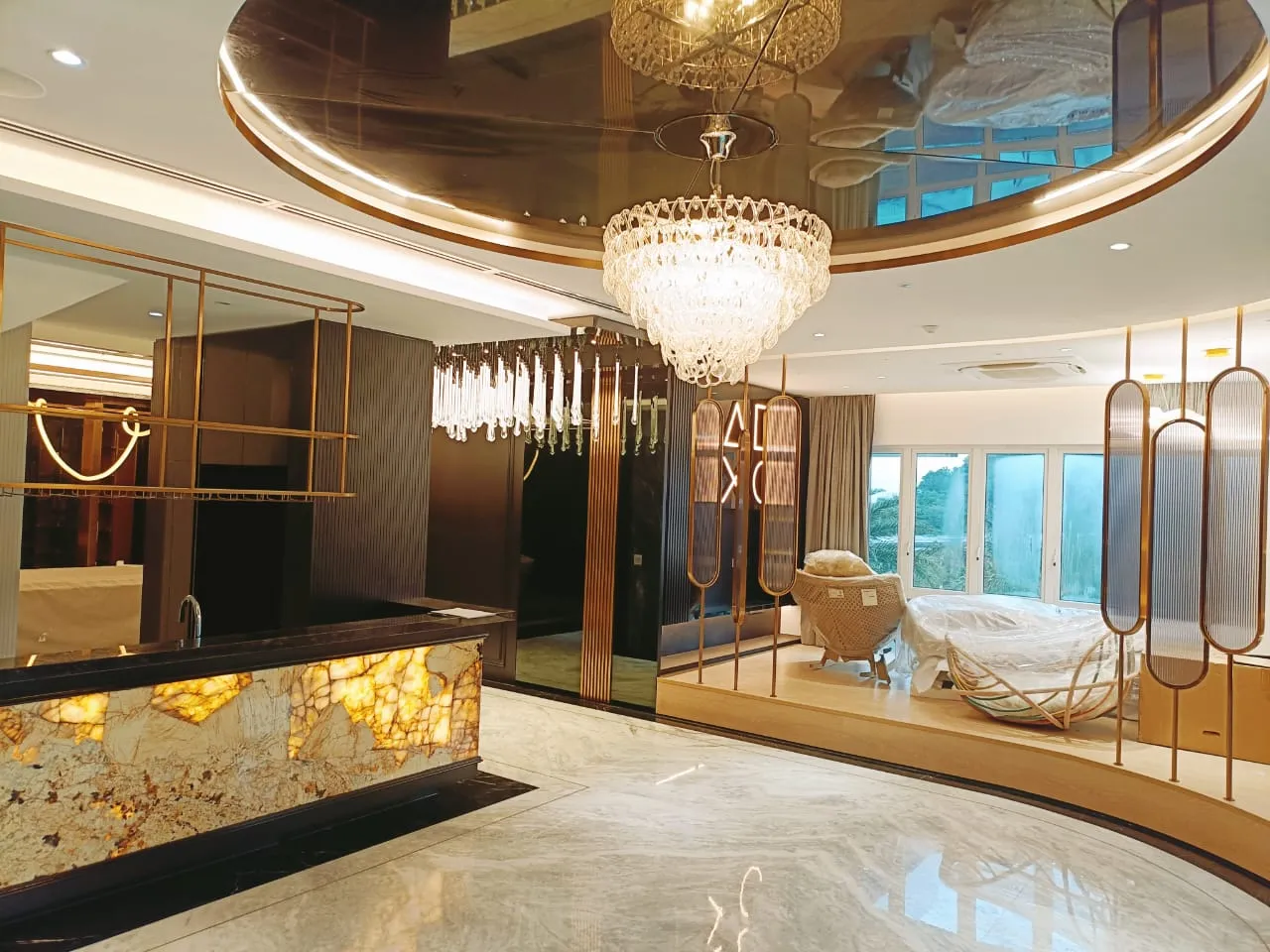
Most smart homes are described by what they let you control. Lights from a phone. Air conditioning from an app. Curtains from a touchscreen by the door. Control like this is useful, and for many people it is the first taste of a smarter way of living, but control alone does not make a building intelligent.
A truly smart home works the other way around. Instead of giving you more things to operate, it quietly takes repetitive decisions off your hands. It notices what is happening inside and outside the building, coordinates lighting, cooling, shading and energy behind the scenes, and leaves you to live in the result. Done well, the technology fades from attention. The best automation is almost invisible.
That idea shapes how Madoc designs and commissions automation systems, and it is the standard this article uses to answer a deceptively simple question. What separates a home full of smart devices from a home that is actually smart?
A truly smart home is not simply a collection of connected devices. It is a home where lighting, climate, shading, audio and other systems share context and handle routine decisions automatically, while keeping manual control available whenever it is wanted. The result should require less attention from the people living in it, not more.
What Actually Makes a Home Smart?
A home becomes smart when its systems can use information such as occupancy, daylight, temperature, weather, energy conditions and personal preferences to make appropriate decisions on their own.
The aim is to remove repetitive decisions from daily life.
Notice that this definition says nothing about brands, apps or gadget counts, and that is deliberate. Whether a home deserves to be called smart is decided by behaviour rather than by hardware. A house with three hundred connected devices can still be a building that waits for instructions. A house with a modest, well engineered system can feel remarkably intelligent, because it responds to real conditions sensibly and consistently.
Getting from one to the other is a progression, and it helps to see the stages laid out.
From Connected Devices to a Truly Smart Home
Almost every home sits somewhere on a spectrum of capability. The steps along it look similar from the outside, yet they represent very different levels of engineering.
Individual devices can be controlled remotely. Wi-Fi lighting, smart plugs, an app for the air conditioning. Convenient, but every device lives on its own island.
Several systems are gathered into one interface. Lights, cooling, curtains and music from a single app or panel. Tidier, yet a person still makes every decision.
The home starts reacting on its own. Lighting follows occupancy, shading follows a schedule, climate follows temperature. Each system runs its own rules.
Systems share information and cooperate. Occupancy, daylight, weather and energy conditions shape how the whole building behaves. Repetitive decisions disappear.
The first level is where most people begin. A connected home is full of devices that can be reached remotely, and there is nothing wrong with that. Switching the air conditioning on from the car is a real convenience. The limitation is that every product works alone, each with its own app, and the person holding the phone is doing all of the thinking.
The second level tidies this up. In a controlled home, several systems meet in a single interface, so lighting, cooling, curtains and music no longer need five different apps. Professionally installed systems often start here, and daily life does improve. Yet the intelligence still lives entirely in the occupant. The house executes instructions. It offers none of its own.
The third level is where automation properly begins. An automated home reacts by itself. Lights respond to occupancy. Shading follows the sun or a schedule. Climate control holds a temperature. Scenes change the character of a room by time of day or activity. This already removes a surprising amount of daily friction, and it is where the gap between consumer gadgets and engineered systems starts to widen.
The fourth level is the subject of this article. In a truly smart home, the individual systems stop behaving like separate machines and start behaving like one building. Lighting understands occupancy and daylight. Shading understands sun, glare and what the climate system is trying to achieve. Cooling and ventilation understand temperature and air quality. Energy management understands what power is available and what the house is consuming. Audio understands scenes and room activity. The people living there are no longer managing any of it, although they can step in at any moment.
That last quality is easy to state and hard to engineer. It rests on five characteristics that separate a truly smart home from a merely automated one.
Five Characteristics of a Truly Smart Home
Context aware
The system weighs several conditions before acting rather than obeying a single trigger. A decision about shading might involve the position of the sun, the weather, the temperature in the room and whether anyone is in it. Context is the difference between a rule that fires and a decision that fits the moment.
Integrated
Lighting, climate, shading, security, audio and energy are engineered as one coordinated system rather than a collection of isolated islands. When systems can influence one another, new behaviour becomes possible. Shading can assist the cooling. Occupancy information gathered for lighting can inform ventilation. Platforms such as Loxone and KNX exist precisely to make this kind of cooperation practical.
Proactive
Predictable, repetitive tasks happen without anyone issuing a command. Nobody should need to switch off lighting in an empty room, close the shading against the same afternoon sun for the hundredth time, or remember the nightly routine of locking up and powering down.
Resilient
The design considers abnormal conditions as carefully as normal ones. A power failure, an internet outage, unusual energy consumption, a sensor that stops reporting. A properly engineered system is expected to keep its core logic running locally and to behave sensibly when circumstances are not ideal, and much of the real engineering effort goes exactly there.
Overrideable
The occupant always keeps appropriate manual control. Automation looks after the repetitive background decisions, and a person can still walk to a switch and change the outcome at any time. A system that fights its owner has failed, however sophisticated the logic behind it.
The rest of this article walks through what these characteristics look like in the systems people live with every day. Before that, it is worth explaining where this way of thinking comes from.
Why I Think About Automation This Way
I did not arrive at building automation from the consumer electronics side. Before entering this industry, I spent two years studying avionics in Bristol in the United Kingdom, followed by three years of degree level study focused on aircraft gas turbine engines, including type-rating training on the Airbus A320 and A330.
That background changed how I think about automation. A fly-by-wire aircraft does not use automation because pilots are unnecessary. It uses automation because a well designed system can manage enormous amounts of routine information consistently, interpret inputs sensibly and reduce unnecessary workload, while the crew keeps full authority over the aircraft. The pilot remains in command without having to manage every variable every second.
A home is obviously not an aircraft, and the engineering requirements are very different. But that design lesson stayed with me. Aviation also made quality feel non-negotiable. A system is only impressive if it behaves consistently when conditions change. And it showed me what automation does for the people inside the machine. In aviation, reducing workload creates a more manageable environment for the crew. In a building, the stakes are different, but thoughtful automation can still make an environment calmer, more comfortable and easier to live in.
I entered the building automation industry in 2013 as a sales engineer working with Crestron systems. Crestron showed me how powerful professionally integrated control could be. It also showed me how system cost and programming complexity could limit how far some projects could realistically go. I became convinced that a smart home could feel far more complete if the technology, architecture and programming were designed around what the occupants actually needed, rather than around how many functions could be placed on a touchscreen.
Those two experiences eventually came together in Madoc. I wanted systems that work together rather than side by side. Automation that runs locally, understands context and keeps manual control within reach. Commissioning that treats the first months of living with a system as part of the engineering, not an afterthought. Everything this article argues, from the five characteristics to the way exceptions are handled, comes from that combination of aviation thinking and thirteen years of hands on integration work.
Lighting Should Stop Being Something You Think About
Lighting is the easiest place to feel the difference between control and intelligence. Good lighting automation can consider occupancy, daylight, the time of day, the purpose of the room and the preferences of the people using it, with manual override always available. Not every project uses every input. These are design possibilities, chosen room by room to suit how the house is lived in.
Think about what that allows. While daylight is doing the job, artificial lighting has no reason to be on. At dusk, the behaviour changes and light arrives where the household needs it. Late at night, a corridor does not need to greet you at full brightness. The circulation light that guides someone at 2am can be a fraction of what the same corridor provides at 8pm. When nobody is in a room, its lighting can switch itself off. A kitchen, a bedroom, a bathroom and a staircase each behave differently, because they are used differently.
The intelligence is not that a light can be switched from a phone. The intelligence is deciding when artificial light is actually needed, how much of it is appropriate and when it should disappear again.
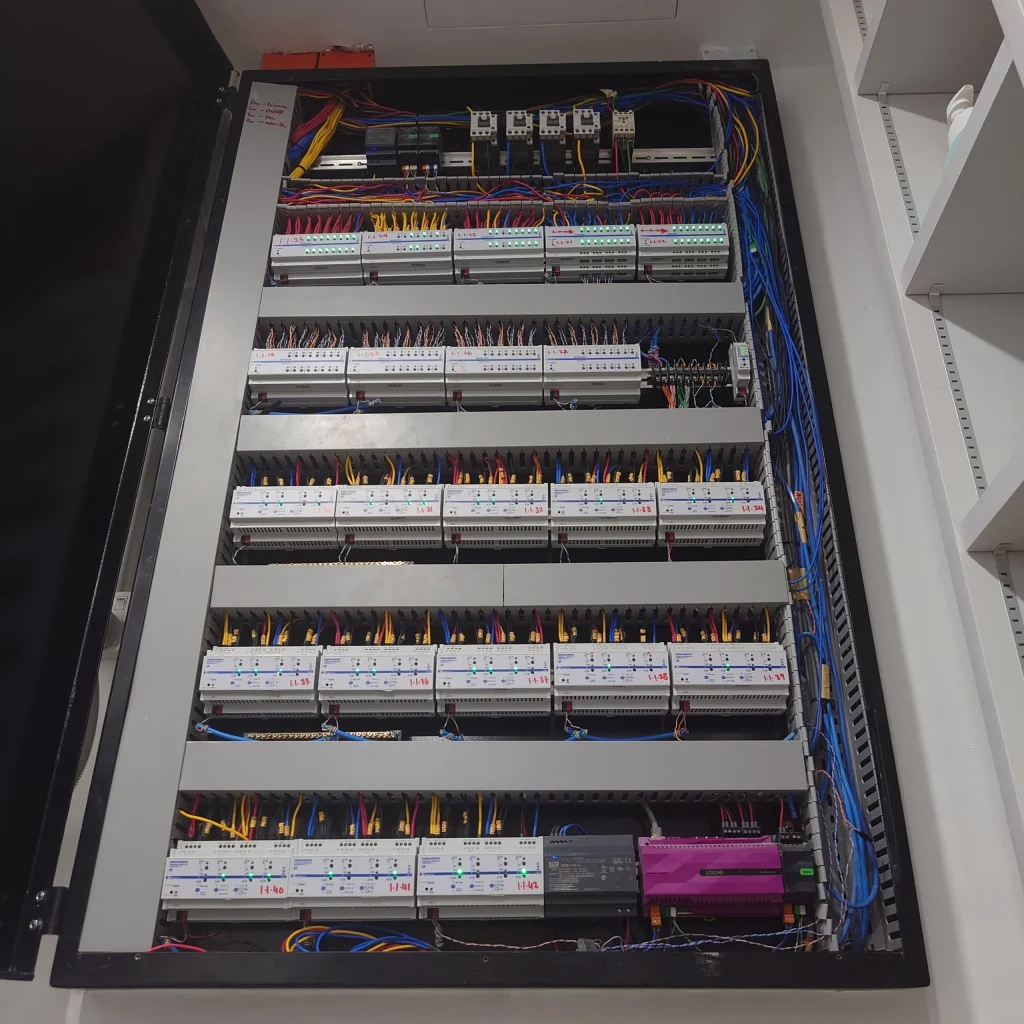
Scale makes the point clearer. One residential project in Kuala Lumpur coordinates more than one hundred dimmed lighting circuits through its central system. Nobody could reasonably operate that by hand, and nobody should have to. The design has to decide what happens on its own, so that after commissioning, lighting stops feeling like a system the owner operates and becomes something the house simply gets right.
Shading Should Respond to Conditions, Not Just a Timer
The simplest shading automation is a timer. At 5:00pm, the blind closes. It is predictable, it is easy to set up, and it misses the point.
Context aware shading can weigh the position of the sun, the orientation of each facade, glare, cloud cover, the weather, conditions inside the room, occupancy, the time and the preferences of the household. Here is the idea that matters. At exactly 5:00pm on two different days, the correct shading decision may be completely different. On a hot, glaring afternoon, the west facade may have deserved protection since 3:00pm. On a grey, overcast afternoon at the very same hour, closing the blinds achieves nothing except a darker room. The clock reads the same on both days. The conditions do not, and intelligence lies in telling them apart.
A timer is easy. Engineering what should happen when conditions change is the difficult part.
None of this means every blind must react to every passing cloud. How far a particular project takes this depends on the facades, the hardware and the people living behind them. Some households want shading that thinks for itself all day. Others want it to handle only the harshest sun and otherwise stay out of the way. Both are valid outcomes of the same design conversation.
Climate Control Should Consider More Than Temperature
In Malaysia, cooling shapes both comfort and the energy bill more than any other system, which makes it strange that so much of it is still run on a single number. Air conditioning that only chases a thermostat setting treats every hour of every day the same. It has no idea whether the room is occupied, what the air quality is like, or what the weather is doing outside.
Treating climate as a strategy rather than a setting changes the questions. In one Madoc residential project, both Daikin VRV air conditioning and VAM ventilation units were integrated into the wider automation strategy. Rather than treating cooling and ventilation as two unrelated systems, the automation can use relevant sensor information and environmental conditions to coordinate how they operate. Under favourable conditions, and where the HVAC design permits, ventilation can help maintain comfort and indoor air quality while reducing unnecessary mechanical cooling demand.
The exact behaviour depends on the system configuration, the indoor and outdoor conditions, the sensor information available and the logic agreed during commissioning. That is not a caveat to apologise for. It is the nature of engineering. The equipment itself did not become smarter. The decision making around it did.
From cooling equipment to a climate strategy
This is also why climate automation is best designed alongside the mechanical services rather than bolted on after the fact. When the automation designer and the HVAC designer are talking early, the building gains options that no thermostat, however clever, can offer later.
A Dashboard Is Not Energy Management
Energy has become the most fashionable screen in the smart home. House consumption, solar production, battery level, EV charging, grid import and export, all charted beautifully. It is worth being precise about what that screen is. It is monitoring. It shows information, and information is valuable, but it does not act.
Energy management is something else. It uses the same information to make decisions. A dashboard tells you what is happening. Automation can decide what to do about it.
Energy monitoring vs energy management
The distinction holds well beyond houses. At the TNB Hub in Iskandar Puteri, a commercial customer service centre, energy monitoring with threshold alerts was built into the automation, so the building itself flags unusual consumption rather than waiting for someone to study a report. The same thinking scales down to a bungalow and up to commercial projects. Data on a screen is the starting point. Behaviour is the goal.
What Should a Smart Home Do During a Power Failure?
A power failure is one of the clearest ways to see the difference. Consider a home with solar generation and battery storage. Monitoring tells you the battery is at 37 per cent. Management notices that the battery is at 37 per cent, that grid power has just failed, and that the house needs to change how it behaves. The number is hypothetical. The idea is not.
Here is how an energy aware home could be engineered to respond. This is an example of deliberate project engineering, designed and agreed in advance, not a default behaviour that every system ships with.
Grid failure is detected.
The owner is notified.
The house enters an essential mode.
Selected non-essential air conditioning loads are reduced or disabled.
Lower energy cooling, such as ceiling fans, is prioritised where appropriate.
Selected water heating is disabled.
Non-essential lighting circuits are switched off.
Remaining lighting is dimmed where appropriate.
Stored battery energy is preserved for the loads that matter most.
A response like this cannot be improvised by software on the day. It only works when the electrical design has made those loads controllable in the first place, when the battery system can share its state with the automation, and when the priorities have been agreed with the owner long before the first outage. Life safety systems are never part of casual load shedding. This is why serious energy management is an engineering exercise, decided at the drawing board, rather than a feature toggled on in an app.
A Smart Home Must Understand When Normal Is No Longer Normal
Simple automations are written for normal days, and on normal days almost anything works. The engineering becomes visible when conditions change. A cloudy morning. Rain. A power outage. A guest staying the week. Nobody home at all. The middle of the night. CO₂ creeping up in a closed room. An unusually hot afternoon. A battery running low. An internet connection that has dropped. A person who has just overridden something by hand. No single home faces all of these at once, but every home faces some of them, and a good design considers normal operation and the exceptions together.
Take the most basic rule in home automation. At 7:00pm, the lights come on. Before executing it, a well designed system might ask a few quiet questions. Is anyone actually home? Is daylight still doing the job? Did someone switch this room off by hand ten minutes ago? Is the house in an energy saving mode? Is this room even in use this evening?
A system should not blindly execute a timer when the context says something else. Writing the rule takes a minute. Deciding how it should behave in all the moments when the rule does not fit is the real design work, and it is the part that rarely appears in product brochures.
It is also one of the lessons I carried from aviation into building automation. Normal operation is only part of the design. Deciding what should happen when conditions change is the other half.
Automation Should Never Remove Manual Control
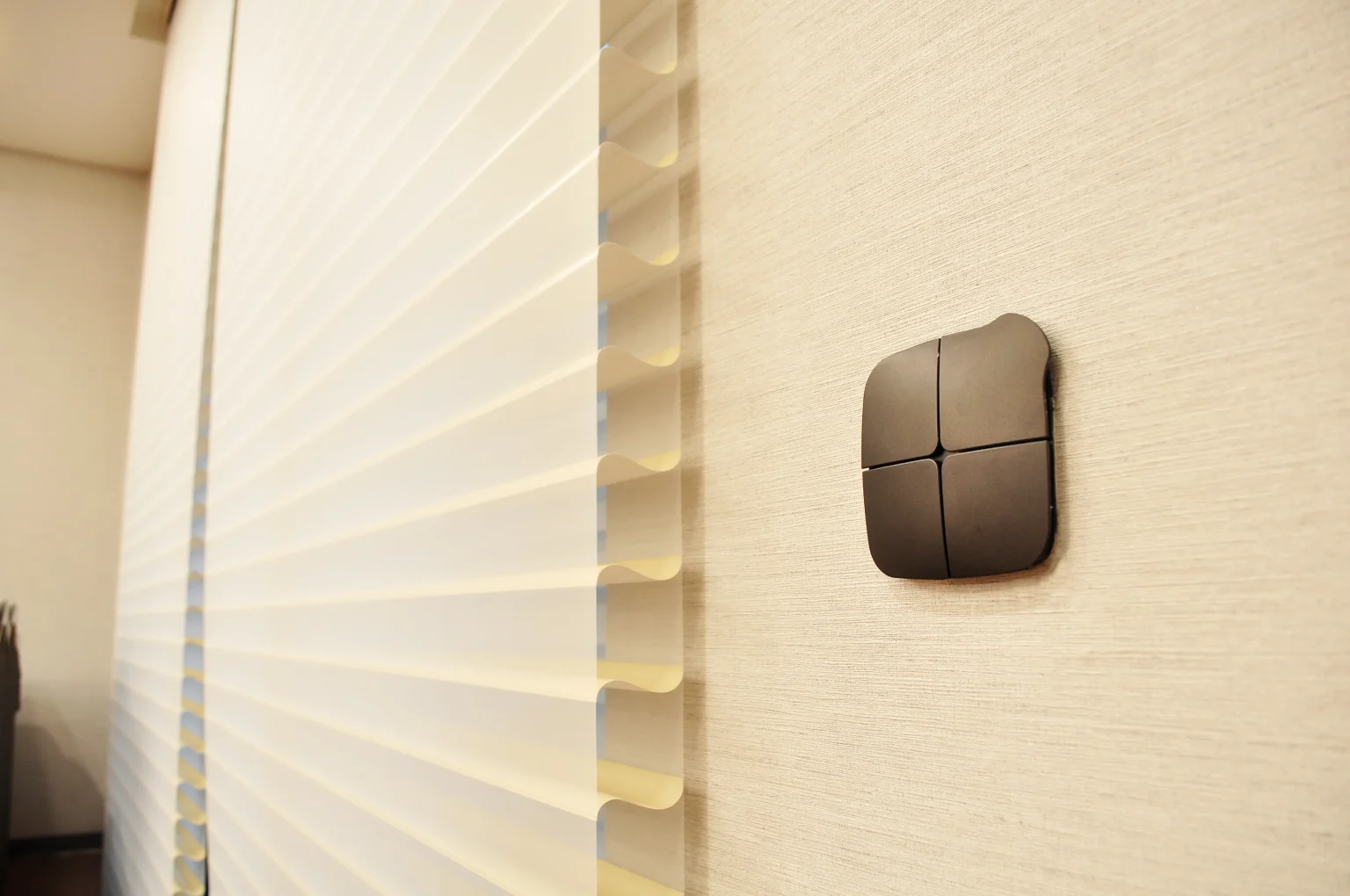
A common fear about automation deserves a direct answer. The goal is not a house with no switches, and it is certainly not a house that can only be operated from a phone. Wall controls remain important. They are how a guest changes the lighting without a tutorial, how a child operates their own bedroom, and how everything keeps working when a handset is flat or missing. The phone is optional. It is a convenience, never the centre of daily living.
Automation should reduce interaction, not remove control.
The principle is familiar from other automated systems. Assistance should reduce workload without removing appropriate human authority. Override behaviour is itself a design decision. When someone adjusts a room by hand, the system should respect it. How long that override holds, and when automation quietly resumes, is agreed during commissioning rather than left to chance. Handled well, the household never thinks about any of this. They touch a switch, the room obeys, and the automation picks up again later without being noticed.
What Happens When the Automation Gets It Wrong?
Sometimes it will. Honesty about that is part of doing this work properly. Lighting that times out while someone is sitting still with a book. Shading that closes at the exact moment the owner wanted the view. A scene that made sense in a meeting and feels wrong in real life. Poor automation is not a catastrophe. It is an annoyance, repeated daily, and annoyance is how trust in a system dies.
A technically sophisticated rule can still be the wrong rule for the household living with it. That is why good automation is never finished at handover. It needs commissioning, then observation, then adjustment. It needs the client to report what irritates them and a team that treats that feedback as tuning data rather than criticism. It needs manual overrides that keep life comfortable while the logic is refined. This cycle of design, programming, commissioning and support is where a system stops being technically correct and starts being right.
The smartest automation is not the automation with the most rules. It is the automation whose rules match the people living with it.
Every Household Needs Different Automation
A family with young children, a couple who both travel for work, a single occupant, a household caring for an elderly parent and a home built around entertaining may buy the same technology, and they should never receive the same programming. One household wants the house dark and silent by ten. Another is just warming up. One wants everything to happen by itself. Another wants suggestions, and the final say.
The automation has to match habits, room usage, comfort preferences, daily routines, appetite for change and energy priorities. This is why the design conversation matters more than the product list, and why no two of the residential projects Madoc has delivered run identical logic. The technology is repeatable. The behaviour should not be.
Audio Can Do More Than Set the Atmosphere
Music is the obvious reason to put speakers into a building, and streaming from a phone to a speaker is convenient without being intelligent. What changes in an integrated installation is that the same speakers can also respond to what the building is doing.
Audio can become the audible interface of the building.
In a Loxone system an audio zone is a function block in the same logic as the lighting, the shading and the climate, so it can be given work beyond entertainment. Its documented inputs include a doorbell ring, an alarm clock, warning and fire alarm tones and custom sounds. When an event sound finishes, the zone returns to what it was playing.
The doorbell is the clearest example. Rather than relying on one traditional chime somewhere in the house, the intercom can be paired with selected audio zones so the ring is heard where people actually are. This is an available integration strategy, not something every project needs.
Announcements arrive two ways. A live announcement can be made from the app on a phone or tablet, and text to speech can turn written text into a spoken message. Current Loxone documentation states that text to speech requires an internet connection, which matters if a building depends on it. Pre-recorded and custom sounds are a separate mechanism. The useful messages tend to be the dull ones. The front door is still open. The alarm is being armed.
Integrated audio can also provide additional audible responses for alarm or building events. That is a supplement, not a replacement. Dedicated fire detection and life safety systems remain separate where regulations require them.
Two quieter capabilities matter more day to day. An audio zone can respond to presence, so playback follows how rooms are actually being used. Zones can also stay independent through an ordinary day, then be grouped when a household is entertaining and the same music should carry across the living areas. Sources can include Spotify, internet radio, AirPlay and local or network libraries, depending on configuration.
None of this makes music less important. It makes the audio system more useful. An arrival scene still brings appropriate lighting, a comfortable temperature and music at a sensible level in the rooms that matter. An evening scene still softens the lighting, closes the shading and keeps selected zones with the household. Sometimes audio's job is atmosphere. Sometimes it is communication. The useful part is that the same audio infrastructure can participate in the wider automation instead of remaining a separate music system.
So What Is a Truly Smart Home?
It is not defined by how many devices it can control, and it is not defined by how impressive the app looks in a showroom. A truly smart home is defined by how well the building understands what is happening in and around it, how intelligently its systems work together, and how little attention those systems demand from the people living there.
When automation is designed properly, much of the technology disappears from everyday life. Lighting arrives when it is needed and leaves when it is not. Shading moves because conditions justify it. Cooling and ventilation cooperate quietly. Energy is watched, and managed, in the background. The switches still work. The app still exists. On most days, neither gets much use.
The house simply behaves as it should.
If you are weighing up platforms, wired against wireless, or how automation fits into a build that is already underway, the Madoc FAQ answers the practical questions clients ask most often.

Founder & Principal Integrator, Madoc
Muzamil Mahmud is the Founder and Principal Integrator of Madoc, a Kuala Lumpur based smart home and building automation systems integrator. He has worked in building automation since 2013, beginning as a sales engineer working with Crestron systems. Before entering the industry, he spent two years studying avionics in Bristol in the United Kingdom, followed by three years of degree level study focused on aircraft gas turbine engines and type-rating training relating to the Airbus A320 and A330. That engineering background shapes how Madoc approaches automation. Systems should be reliable, integrated and designed to reduce unnecessary interaction, rather than simply moving controls onto a screen.
Design the Automation Around the Building
If you are planning a new home, a renovation or a commercial project, early coordination gives the automation, electrical and building systems room to be designed properly rather than squeezed in at the end.
Book a Consultation Explore Our Projects