
How much does a smart home cost in Malaysia? It is the most common question we are asked, and the honest answer begins with a problem of language. The term "smart home" is used to describe a plug-in socket bought online, a handful of app-controlled switches, a wireless starter package, and a house where lighting, climate, shading, audio, security, access and energy all run as one engineered system. Those are not variations of the same project. They have almost nothing in common technically, and they do not belong on the same price list.
So before any figure is useful, it has to be attached to a category.
If you are looking for a few smart switches, app-controlled devices or a small wireless automation package, the figures below are probably describing a different type of project.
Madoc's pricing below refers to professionally engineered integration across building systems such as lighting, climate, shading, audio, security, access, networking and energy where required.
That distinction is not a judgement about smaller systems. Plenty of homes are well served by consumer devices, and we would rather a reader recognises early that they are looking at the wrong category than discovers it three emails later. What follows is what Madoc's own residential projects cost, and why.
These are starting figures, not fixed packages.
Light fittings, curtain or blind motors and electrical works are excluded unless specifically quoted.
The cost is determined less by the number of "smart devices" and more by how much of the building needs to operate as one integrated system.
Why the Same Question Produces Wildly Different Prices
Two quotations for "a smart home" can differ by a factor of ten and both be honest, because they are answering different briefs.
A device-led system is assembled from products. Smart switches, smart plugs, wireless sensors, a standalone curtain controller, a voice assistant. Each product is complete in itself and mostly controls itself. The value sits in the devices, so the price tracks the number of devices. These systems can be genuinely useful, they install quickly, and for a compact home or a rented apartment they are often the sensible choice.
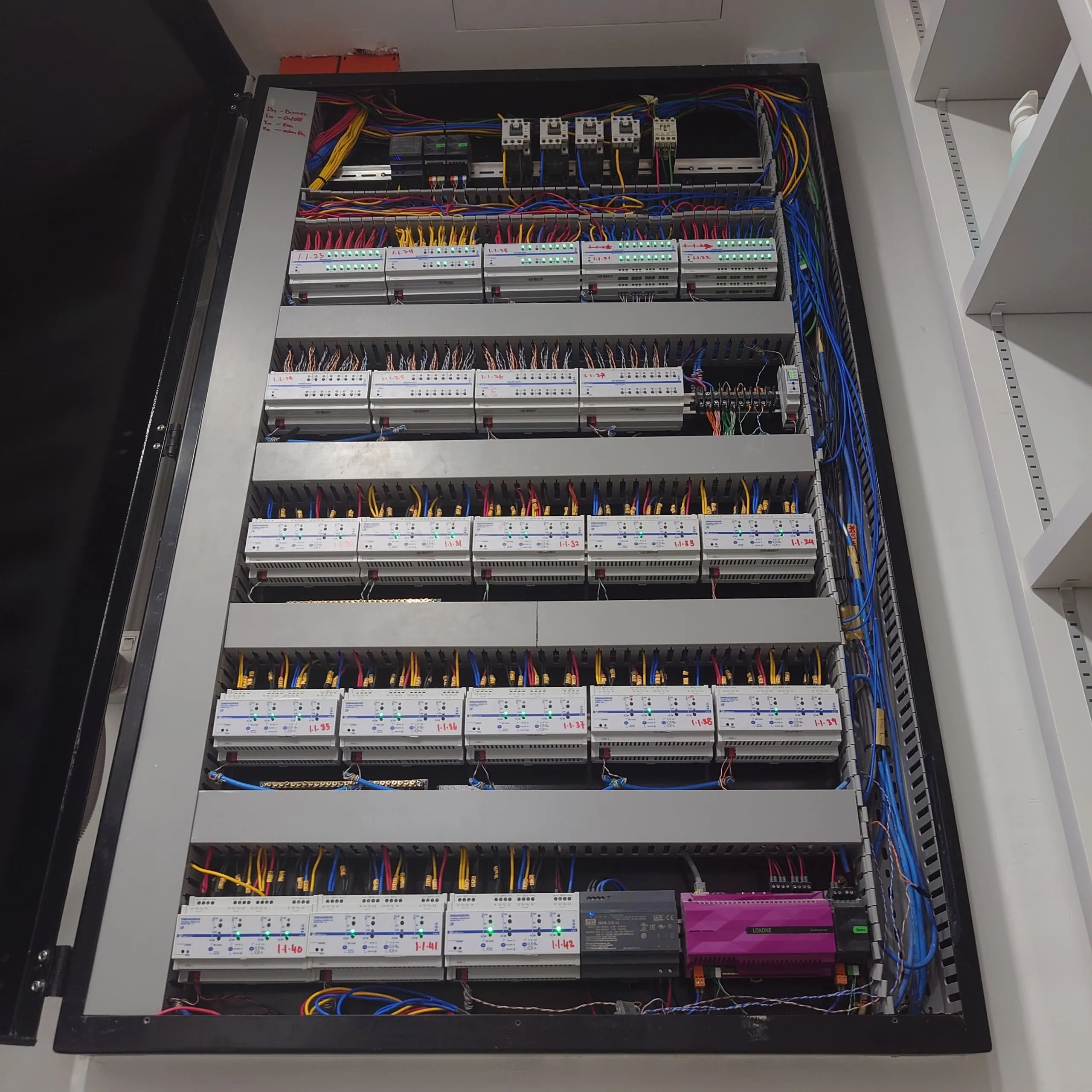
An integrated system is engineered rather than assembled. Lighting circuits are controlled from a panel rather than from the switch plate. Air conditioning is spoken to directly rather than blinked at with an infrared blaster. Shading, audio, security, access, networking and energy monitoring report into the same logic, so the house can respond to conditions rather than waiting to be told. The value sits in the architecture, the wiring, the programming and the coordination, which is why the price does not track device count.
Neither approach is inherently better. They solve different problems at different scales. What matters is knowing which one a quotation describes, because comparing them line by line will always make the integrated system look expensive and the device system look incomplete. If you want the underlying reasoning in more depth, we set it out in wired versus wireless smart home infrastructure, and the behavioural argument for automation over control in what a truly smart home should feel like.
The Main Cost Drivers
Project value is set by scope, not by square footage alone. These are the variables that move the figure most.
Does a Bigger House Always Cost More?
Usually, but not reliably, and the exceptions are instructive.
Consider two projects we could plausibly be asked to price in the same month. House A is a large bungalow with generous rooms, straightforward lighting, split-unit air conditioning, curtains in the bedrooms only and no audio requirement. House B is a smaller three storey home with detailed architectural lighting on DALI-2, a VRF system the client wants properly integrated, motorised shading throughout, four audio zones, cameras, gate and door integration and circuit-level energy monitoring.
House A has more floor area. House B has more system. House B is the larger automation project, and it will cost more.
Property size matters. System complexity matters more.
This is why a price cannot be quoted from a floor plan alone, and why we ask what the house needs to do before we ask how big it is.
What You Are Actually Paying For
Hardware is the visible part of the cost and the smallest part of the difficulty. A control module has a list price that anyone can look up. What that module does in your house, whether it can be maintained in five years, and whether it behaves correctly at 2am when nobody is watching, is the work.
Depending on the scope of the project, that work includes reviewing requirements and turning them into a control strategy, setting the system architecture, selecting equipment that suits the building rather than the catalogue, planning and assembling the panel, coordinating with the other trades, integrating the specified systems, programming the logic, testing it, commissioning it against the design, handing it over with the documentation the project calls for, and managing all of that to a construction programme that rarely stands still.
Not every project includes every item identically. A retrofit apartment and a bungalow under construction demand different amounts of each. But the pattern of where effort goes is consistent, and it is the reason two quotations with similar equipment lists can be very far apart.
Where the Project Value GoesThis describes where effort goes, not a percentage breakdown of project value. The proportions differ on every project.
A Large Part of the Work Happens Outside the Automation Panel
Clients are often surprised that so much of an integrator's time is spent on other people's drawings. It is not administrative overhead. It is the part of the job that decides whether the system can be built at all.
Depending on the project, we coordinate with or review interfaces with the electrical contractor, the HVAC contractor, the lighting supplier or lighting designer, the curtain and shading supplier, the cabinetry maker, security and access installers, the network provider, and often the architect, interior designer and main contractor. We are not contractually managing every trade, and on most projects we are not. We are making sure the boundaries between them are decided before they become expensive.
The failures we are called in to look at are almost never programming failures. They are provisioning failures, and they repeat:
- Curtains specified late, with no power and no control cable at the pelmet, in a room where the ceiling is already closed.
- Air conditioning ordered without the interface module the system needs, leaving infrared as the only remaining option.
- Lighting drivers bought on price, then found to be unsuitable for the dimming method the design assumed.
- A beautiful joinery unit completed with no equipment space, no ventilation and no access for the panel it was supposed to house.
- Door and window contacts omitted before the finishes went on, so the security scope has to shrink or the walls have to open.
Programming cannot compensate for infrastructure that was never planned.
Every one of those items is cheap to get right on a drawing and expensive to correct on site. That is why a professionally integrated project prices coordination as real work, and why the projects that go smoothly are the ones where these conversations happened early.
What Is Not Included in Madoc's Starting Automation Budget?
The starting figures describe the automation scope. Three categories sit outside them unless a quotation says otherwise.
Light fittings
The system controls the lighting. It does not supply the luminaires. Fittings are usually specified by the architect, lighting designer or interior designer and purchased separately, and their cost can easily exceed the control system on a decorative scheme. We will advise on whether a chosen fitting and driver combination will dim the way the design intends, because that affects our scope even though the fitting does not sit in our budget.
Curtain and blind motors
Motorised shading is normally supplied by the curtain or blind specialist, who also handles the tracks, fabric and installation. Madoc integrates and controls it. What we need is agreed early: power at the right place, the correct control interface, and pelmet dimensions that will physically accept the motor.
Electrical works
The starting budget does not include the electrical installation itself. Madoc does carry out electrical works on some projects, and where we do, they are quoted separately according to the actual electrical scope. On other projects the client's own electrical contractor performs the installation and we coordinate with them. Both arrangements work. What does not work is assuming the automation budget silently contains a rewire.
The Ability to Support the System After Handover Matters
An automation system is not a product that is finished when it is delivered. It is a piece of building infrastructure that has to be intelligible to whoever opens the panel next, possibly years from now and possibly not us.
That shapes decisions during the project. Panels are laid out and labelled so circuits can be traced. Logic is structured so it can be read rather than reverse engineered. Equipment is chosen partly on whether it will still be serviceable and available later. None of this is visible at handover, which is exactly why it is easy to leave out of a cheaper quotation.
A lower installation price is not necessarily a lower long-term cost if the system becomes difficult to maintain or support later.
Madoc continues to support the systems we have built when issues arise. Some of the projects we still assist with date back to 2014. That is a statement about continuity, not an unlimited commitment: replacement hardware, changes outside the original scope, travel and certain site attendance may still be chargeable depending on the circumstances and the terms of the project.
Inherited systems installed by another contractor need to be assessed before Madoc can responsibly accept ongoing support.
How Madoc's Design & Consultation Engagement Works
An initial discussion costs nothing. We talk about the property, the systems you want, the stage of construction and the budget you have in mind, and we issue a budgetary quotation from that. For many enquiries this is as far as the process needs to go, and it is enough for you to decide whether to continue.
If you want to go further, into the work where the system is actually designed rather than estimated, that stage is a paid engagement. We call it the Design & Consultation Engagement, and it is priced at 10% of the quoted project value.
Depending on the project scope, the Design & Consultation Engagement can include a detailed requirements review, system architecture, control strategy, interface planning with the relevant systems, equipment planning, panel planning, coordination with the relevant contractors and consultants, and design development as the project evolves. What is appropriate varies with the size and stage of the project, so we agree the scope rather than issuing a fixed checklist.
A worked example
If the initial quoted project value is RM100,000, the Design & Consultation Engagement is RM10,000. If the project proceeds with Madoc, the amount already paid for the Design & Consultation Engagement is credited against the project account.
It is not an additional RM10,000 added on top of the same RM100,000 project. It is the first RM10,000 of it, brought forward so the engineering can begin before the contract is signed. If scope changes during design, as it often does, the project value can still change with it.
The reason we work this way is straightforward. Proper design consumes real engineering time before any equipment is ordered, and a system designed properly at that stage is cheaper to build than one improvised later. Charging for it also means the clients who reach that stage are the ones genuinely intending to proceed.
Travel
Travel within the Klang Valley is included without an additional travel charge. Projects outside the Klang Valley may incur travel and related costs depending on the location, the number of site visits required, the duration of the works and the travel arrangements involved. We set this out in the quotation rather than leaving it to be discovered later.
Why We Ask About Budget Early
Asking for a budget in the first conversation can feel presumptuous. We ask anyway, because without it we are designing in the dark.
A figure tells us whether Madoc is the right fit at all, which systems should be prioritised if not everything can be done at once, what level of integration is realistic, and whether the project is better delivered in phases. Without it, we can produce a technically excellent design that is irrelevant to you, and both sides will have wasted weeks discovering that.
A budget does not mean we automatically design the system to consume every ringgit available. It gives the design a realistic boundary.
In practice the conversation more often goes the other way. Once the priorities are clear, it is common to find that part of the original wish list adds cost without adding much to daily life, and that the money is better spent on the systems the household will touch every day.
Is Madoc the Right Fit for Your Project?
We would rather answer this clearly than let it emerge slowly.
Madoc generally undertakes professionally integrated residential automation projects starting around RM80,000. Bungalows generally start around RM120,000, because the scope that makes a bungalow work as one system is simply larger: more circuits, more zones, more shading, more outdoor and perimeter requirements, and a panel to match.
If your budget is meaningfully below that, it does not mean your project is not worth doing. It means a consumer or wireless smart-home system may be perfectly suitable for what you want, and there are capable providers in Malaysia working in that space. Madoc is simply not the appropriate provider for that scope, and saying so early is more useful to you than a quotation designed to be declined.
If you are somewhere near the boundary, talk to us anyway. Scope can often be shaped, phased or prioritised into something that works. What cannot be done well is compressing a fully integrated system into a budget built for devices, and we will not pretend otherwise.
How Can You Reduce the Cost Without Ruining the System?
There is a good way and a bad way to bring an automation budget down. The bad way is to keep the same scope and buy cheaper versions of everything. The good way is to reduce what the system does while protecting how well it does it.
Protect the permanent infrastructure
Cabling, panel provision, circuit design and network backbone are the parts that are painful and expensive to revisit. They are the last things to economise on.
Prioritise what gets used daily
Lighting and climate are touched constantly. A rarely used feature in a rarely used room is a legitimate candidate for later, or never.
Reduce complexity before you reduce quality
Fewer, properly engineered zones will outperform a larger number of compromised ones. Simplifying the brief is usually better than downgrading the components.
Do not automate things without a reason
Automation should remove attention from the household. If a function only exists so it can appear on an app screen, it is adding cost and maintenance without adding much else.
Features can often be added later. Correcting poor infrastructure after a house is finished is much harder.
Phasing
Phasing works well when the infrastructure anticipates it. A common shape, and only an example rather than a prescription, is to put lighting, HVAC, shading and networking in the first phase because they depend on wiring and construction, then add audio, energy monitoring and additional security later once the house is occupied and the priorities are clearer.
The condition for this to work is that phase one leaves room for phase two: panel space, spare capacity, cable routes and a control architecture that was designed to be extended. Phasing an unplanned system is not phasing. It is doing the job twice.
Plan the Automation Before the Finishes Close
The best time to involve an integrator is earlier than most people expect, and the reason is not commercial. It is that the decisions which constrain an automation system are made by other trades, usually before anyone has thought to ask about automation at all.
Ideally the system is discussed before electrical first fix. In practice, the deadlines that matter are the points after which options start closing: before the wiring is completed, before ceilings are closed, before lighting drivers are ordered, before curtain pelmets are built, before HVAC interfaces are finalised, and before cabinetry is fabricated.
When to Involve MadocThe widest set of options. Control strategy can still shape the lighting design, the shading approach and where equipment will live.
Circuit counts, dimming method and the HVAC interface can still be specified correctly rather than worked around.
Still workable. Cable routes and panel provision can be adjusted, though some choices are now fixed.
Options narrow quickly. Anything requiring a new cable becomes disruptive, and wireless compromises start entering the design.
Whatever was provisioned is what can be integrated. This is where unplanned projects discover their limits.
This does not mean Madoc has to be engaged at concept stage on every project. Plenty of good systems have been delivered from a later start, and retrofit work is a normal part of what we do. It means that the earlier the conversation happens, the more of the design remains genuinely open, and the less of the budget goes on working around decisions nobody knew they were making.
What Helps Us Give You a Realistic Figure
You do not need any of this to make contact, and we would rather hear from you early with nothing than late with everything. But the more of the following is available, the more useful our first response will be.
- Architectural floor plans
- Reflected ceiling plan or lighting layout
- Electrical drawings, if they exist yet
- HVAC schedules or equipment selections
- Curtain and blind locations
- Security, audio and networking requirements
- Project location and current construction stage
- Target completion date
- The systems you actually want, and an approximate budget
If you have plans but no idea which systems you need, that is a normal starting point. Working out the second from the first is part of what the design stage is for. You can also look through our residential projects to see the range of scope these budgets describe, or read more about how we design, engineer and deliver a system. The Muar Residence case study shows one complete example, from control architecture through to the systems the family uses daily, and the Loxone platform underpins many of these homes.
Smart Home Cost in Malaysia: Frequently Asked Questions
How much does a professionally integrated smart home cost in Malaysia?
With Madoc, residential and high-end condominium projects typically start around RM80,000, and bungalows around RM120,000. These are starting automation budgets rather than fixed packages, and the final figure depends on how many building systems need to work together.
Is RM50,000 enough for a Madoc system?
Generally no, for the kind of fully integrated project described here. That budget can still buy a capable consumer or wireless smart-home system from a provider who specialises in that category, and for some homes that is the right answer. If you are near the boundary, it is worth a conversation, because scope can sometimes be shaped or phased.
What does the RM80,000 starting budget exclude?
Light fittings, curtain or blind motors and electrical works, unless they are specifically included in a quotation. Madoc does carry out electrical works on some projects, quoted separately according to the actual electrical scope.
Why do bungalow projects normally start around RM120,000?
Because the scope is larger before any luxury is added. More lighting circuits, more climate zones, more shading, outdoor and perimeter requirements, longer cable runs and a larger control panel. It is a bigger system, not simply a bigger house.
Why does professional automation cost more than smart devices?
Because you are buying a system rather than a set of products. The value sits in the control architecture, the wiring, the coordination with other trades, the programming, the commissioning and the ability to support the result years later. Device-based systems price by device count; integrated systems price by how much of the building has to behave as one.
What is Madoc's 10% Design & Consultation Engagement?
After the initial discussion and budgetary quotation, clients who want to move into detailed consultation and design development enter a paid engagement priced at 10% of the quoted project value. Depending on the project scope it can include requirements review, system architecture, control strategy, interface and equipment planning, panel planning, coordination with relevant contractors and design development.
Is the 10% credited if the project proceeds?
Yes. If the project proceeds with Madoc, the amount already paid for the Design & Consultation Engagement is credited against the project account. On a RM100,000 quoted project the RM10,000 is the first part of that project value rather than an extra charge on top of it. Project value can still change if the scope changes during design.
Can automation be completed in phases?
Yes, provided the first phase is designed to be extended. Panel space, spare capacity, cable routes and a control architecture that anticipates growth are what make phasing work. A common example is lighting, HVAC, shading and networking first, with audio, energy monitoring and additional security added later.
When should Madoc be involved in a project?
Ideally before electrical first fix, and preferably while lighting and HVAC design are still being decided. The practical deadlines are the points after which options close: wiring completed, ceilings closed, lighting drivers ordered, pelmets built, HVAC interfaces finalised and cabinetry fabricated. Retrofit projects are still very possible, with a narrower set of choices.
Planning a Professionally Integrated Smart Home?
Send us whatever you have. Plans if they exist, the systems you want the house to handle, where the project is and roughly what you are working with as a budget. We will tell you honestly whether the scope and the budget fit together, and what we would prioritise if they do not.
If the answer is that Madoc is not the right fit, we will say so at that point rather than after a month of drawings.
Discuss Your Project Explore Residential Projects
Founder and Principal Integrator at Madoc. Working in building automation since 2013, with an earlier engineering background in avionics. Responsible for system architecture, integration, commissioning and long-term support across Madoc's residential and commercial projects. More about Muzamil.